
Work in Alaska Fishing: Join the Juneau Charters Crew
February 14, 2026
Become Part of the Most Exciting Team in Southeast Alaska
There is a certain magic to the morning air on the docks in Juneau. If you’re the kind of person who dreams about fishing all day long, this might be a great opportunity for you. Working in Alaska and fishing all day? Now that’s living the dream!
It’s more than just a job; it’s a crash course in resilience, teamwork, and the raw beauty of this wild place. Whether you’re looking to join a commercial vessel or deck hand for a charter fishing company, we’ve got you covered. In this post, we’re going to go over what you need to know about how to start working on a boat in Alaska.
What It’s Really Like Working the Alaska Fishing Industry
Before you pack your bags, you need to know that working in the Alaska fishing industry is as physically demanding as it is rewarding. This isn’t your standard 9-to-5. You’ll be trading climate-controlled offices for the unpredictable spray of the fjords.
Here’s what you can expect:
- Long Hours: 12 to 16-hour days during the peak season
- Physical Labor: Lifting 50-75 lbs and standing for long periods
- Unmatched Scenery: An “office” that includes breaching humpback whales
Enthusiasm and willingness to learn go a long way as a deckhand. If you have a passion for the outdoors, fishing, and don’t mind using your body all day long, this might be an excellent job for you! Working on a fishing boat in Alaska isn’t something everyone gets the opportunity to do.
How to Work on a Fishing Boat in Alaska: The Deckhand Role
The most common entry point is as a deckhand. Deckhands are the heartbeat of the boat. They don’t just fish; they manage the entire guest experience. At Juneau Charters, we’re focused on fun for everyone and a fishing experience that anyone can enjoy.
Daily Responsibilities for Deckhands
Gear/Boat Prep
- Rigging rods and reels before each trip
- Ensuring there’s enough bait
- Stocking snacks and water
Guest Support
- Assisting clients with their lines
- Helping land those legendary Alaskan halibut and salmon (netting/gaffing)
- Maintaining a safe environment for crew and guests
Processing the Catch
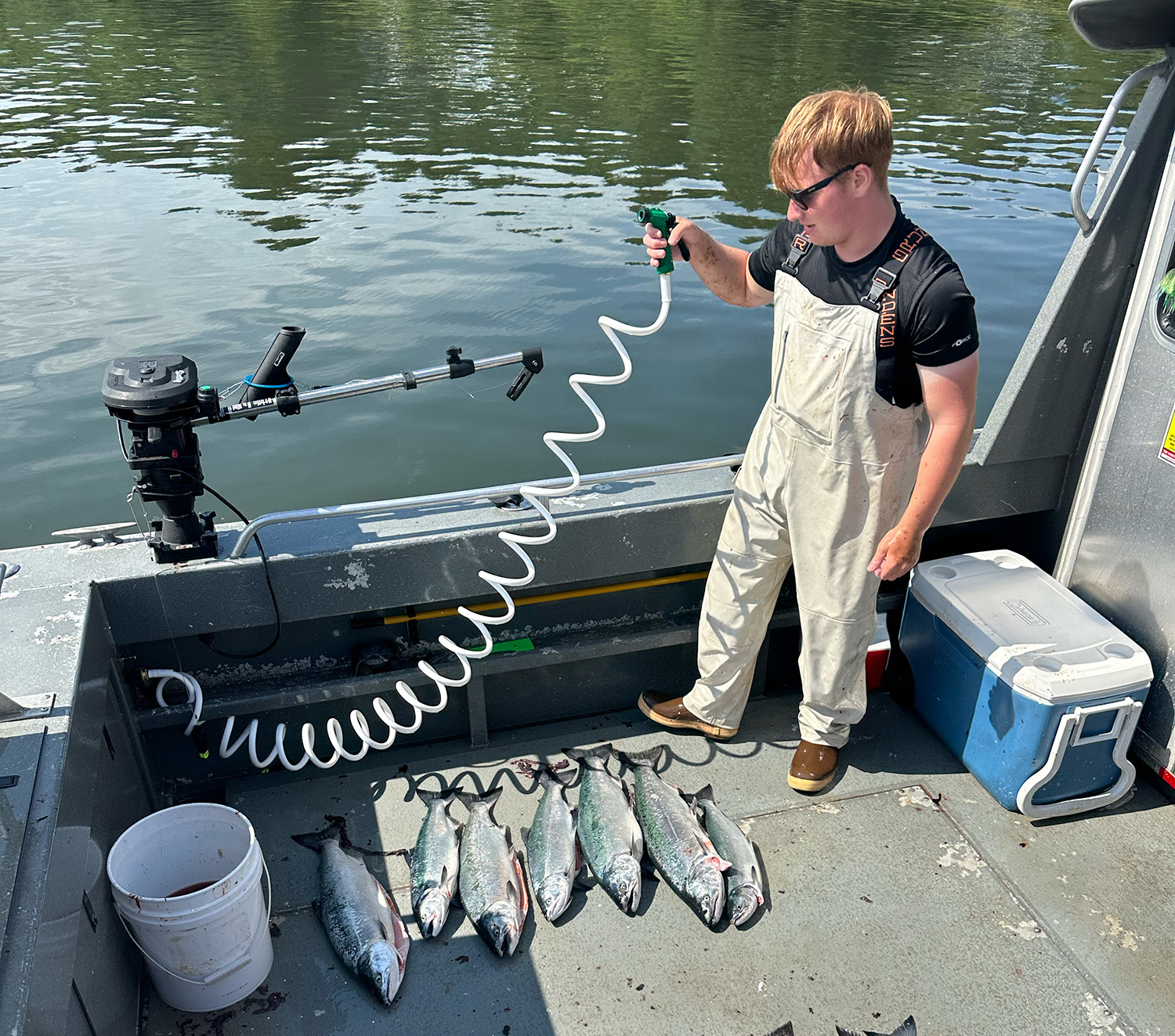
- Cleaning and packing fish for our processor
- Occasionally, filleting fish for guests to take with them
Vessel Maintenance
- Scrubbing decks and keeping the boat in good condition after each trip
Deckhands often go on to become captains, and here at Juneau Charters, we’re always happy to help somebody reach that dream! It can take between 4 and 8 years to become a fully licensed captain if you’re starting as a deckhand.
Future Roles and Opportunities To Work in Alaska Fishing
While we are currently focused on hiring deckhands, we often have other opportunities for those who excel in hospitality and logistics.
Becoming a Licensed Captain
To lead a vessel for hire, you must hold a U.S. Coast Guard license (OUPV or Master). Experience navigating Southeast Alaska’s waters is preferred, but not a requirement. Oftentimes, our deckhands transition to captains after just a few summers!
Learn more about what it takes to become a licensed captain.
Van Drivers & Logistics Specialists
Not every hero in this industry wears rubber boots! Our van drivers are the first point of contact for many guests, and we couldn’t do what we do without them.
Role: Transporting guests from the cruise ship docks to our vessels
Requirements: A clean driving record and the ability to make people feel welcome
Dock Representatives: The Face of the Company
This position is ideal if you have a knack for organization and love meeting new people. Dock reps manage guest manifests, coordinate with cruise ship managers, and ensure everyone gets where they need to go at the right time. No experience necessary, but customer service skills are a plus!
How to Apply to Work on a Fishing Boat in Alaska
Knowing how to work in Alaska fishing businesses is mostly about finding the right fit. To apply to work on a fishing boat in Alaska, you should start your search in late winter or early spring. If you’re interested in working for Juneau Charters, reach out to us for an application.
Submit Your Application Early: We’re often fully crewed by April, so don’t wait until the salmon are running!
FAQs About Your Opportunity to Work in Alaska Fishing
Do I need a car to work in Juneau?
Juneau is a unique city in that you can’t actually drive here from the outside world! Everything arrives by boat or plane. Because the community is geographically isolated, having a car is helpful for grocery runs or exploring local trails on your day off, but it isn’t strictly necessary. Ubers, taxis, public transit, and carpooling are all great options!
Is employee housing provided?
Finding a place to live in Juneau during the summer can be competitive. While Juneau Charters does not always provide dedicated employee housing, we do our best to help our crew find local leads or connect with other seasonal workers for shared rentals.
There are even occasionally boats available to live on in the summer! If you are coming from out of town, we recommend starting your housing search as early as February or March. Online forums like Facebook are a great resource for available rentals in Juneau.
What does a typical summer schedule look like?
When you work in Alaska fishing, you have to “make hay while the sun shines.” During the peak of the salmon and halibut runs (July and August), you should expect to work 12 to 16-hour days, often seven days a week.
The sun stays up late, and so do we! While the pace is fast and the work is physical, the season is short. Most of our crew finds that the camaraderie and the potential for high tips make the long summer hours well worth the effort!
Ready to trade the office for the ocean? Join Juneau Charters and make this summer one for the record books!

